


The Sustainability Circle: Supporting Partners That Care for Our Land
By July 24, 2024 Community banking
When you consider the concept of sustainability, you may immediately think about the environment — the responsible management of land, water, energy, and other natural resources.
But at its core, sustainability is an acknowledgment that seemingly unrelated parts of our world are intimately interconnected, and that every action carries with it a potential implication. And time must be a key consideration: Practices that are sustainable must be supported continuously, so that the needs of the present don’t compromise those of the future.
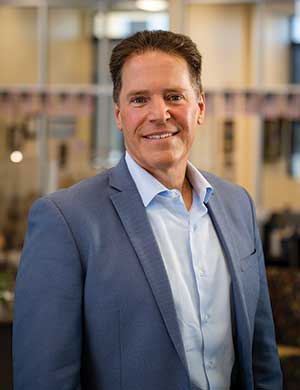
“Plumas Bank leadership believes environmental and economic sustainability are permanently intertwined,” said Andrew Ryback, president and CEO of Plumas Bank. “We are dedicated to helping partners who are dedicated to caretaking our land and resources, because we know they will be critical to the success and well-being of our clients, employees, and communities for generations to come.”
Environmental and Economic Sustainability Go Hand in Hand
As a reflection of that focus, Plumas Bank is committed to promoting economic sustainability — in practices that inspire long-term financial growth with an eye toward positive impacts on social, environmental, and cultural aspects of its communities.
One platform serving this goal is agricultural lending, supporting the ranching and farming communities of northeastern California, northern Nevada and southern Oregon. Another is through partnerships with non-profit agencies dedicated to resource conservation.
Below are three examples of Plumas Bank clients that advocate for resource conservation through education and collaboration — the Feather River Resource Conservation District, Modoc Resource Conservation District, and Plumas Audubon Society. Each has access to local business checking accounts, savings accounts and operating lines of credit (loans) through Plumas Bank. And because these entities are funded in large part by grants and donations, they often rely on loans to pay for projects.
“Grants are complicated processes that sometimes take many months from award to funding, and donations take time to secure,” said Ryback. “With the help of Plumas Bank’s loan resources, the agencies have the capacity to pay for labor, equipment, and other costs connected to their resource conservation projects. They don’t have to wait for funding to come through, because they have a financial partner there to bridge the gap.”
Learn more about this sustainable circle of economic and environmental life — how Plumas Bank supports the agencies that care for the land that these very communities are built upon — in the spotlights below.
Restoring Land through Relationship Banking
The Feather River Resource Conservation District (RCD) undertakes projects that promote economic and ecological sustainability, fuels reduction, erosion control, riparian restoration, native vegetation, soil health, and carbon farming.
“A lot of our projects involve assisting local landowners with fire recovery and reforestation,” said Michael Hall, district manager of the Feather River RCD. “There are a lot of seasonally based ups and downs in terms of expenses and cash flow. Having a bank and staff who understand these needs helps us focus more about restoration work on the ground.”

That work has been even more important on the heels of the Dixie Fire, a massive California wildfire that swept through Northern California in 2021.
“Since the Dixie Fire, our focus has been on helping Plumas County become more resilient to wildfires,” Hall said. “This includes not only restoration in burnt areas, but also thinning green forests to improve stand health.”
To that end, Plumas Bank has helped the Feather River RCD navigate the financial requirements of its grant funders. This is where relationship banking makes a difference, because businesses benefit from being on a first-name basis with the bankers helping to connect them with the necessary valuable resources to fund their operations.
“Many of our projects are high-dollar amounts that require several individual accounts,” Hall said. “The supportive Quincy branch team is always available to set up new accounts and assist with transfers. It’s helpful to have a local branch we can walk into when we have a question or an issue comes up.”
Bridging the Grant Gap
Much like the Feather River RCD, the Modoc RCD is also dedicated to conservation efforts focused on forest and fire health, healthy soils, watershed health, and local outreach and education.
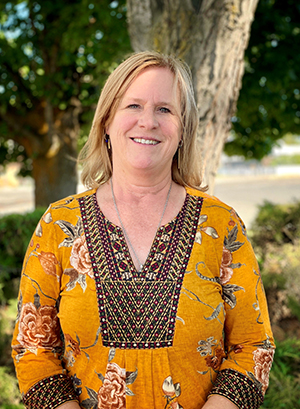
“Modoc Resource Conservation District is positioned to help landowners, agencies, and the community do conservation work,” said Lani Estill-Cockrell, the agency’s business manager. “Projects include fuels reduction, water developments, riparian restoration, and coordination to help others do these types of projects.”
But this important work requires working relationships that break down barriers faced by special districts in the state of California.
“We have many partners in our work and consider Plumas Bank to be one of our most valued partners,” Estill-Cockrell said. “We are mostly grant funded, and most grants do not pay for projects until they are completed. This leaves a gap in funding.”
That’s where Plumas Bank comes in, bridging the gap with a line of credit.
“This enables us to pay our obligations and wait for grant funds,” she said. “We also have savings and checking accounts and love the personal service that the bank provides. It is nice to have a financial partner that we can rely on.”
Small Non-Profit, Big Impact
Whereas Feather River and Modoc RCDs are local, not-for-profit special districts created by state government, Plumas Audubon Society is a member-supported non-profit. Its goal is to promote understanding, appreciation, and protection of the biodiversity of the Feather River region through education, research, and the restoration and conservation of natural ecosystems.
While birds are an area of focus for Plumas Audubon — the agency sponsors field trips to birding spots around the county and coordinates an annual Christmas bird count, for example — the agency’s commitment to conservation and large-scale habitat improvement go well beyond.
“Plumas Bank has taken care of our banking needs for over two decades,” said Piers Strailey, president of the Plumas Audubon Society. “They understand the needs of a small, non-profit organization.”
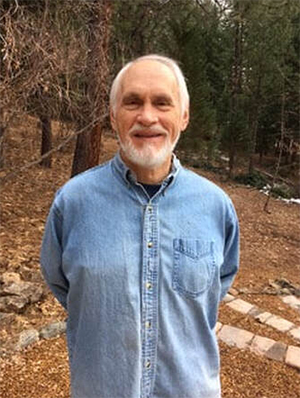
It’s a long-term relationship that has adapted in terms of resources and capacity just as the scope of Plumas Audubon’s efforts has evolved.
“For example, they set us up with an operating line of credit so we can pay the bills while we are waiting for grant money to come in,” Strailey described. “This simple act alleviated our stress so we could focus on our mission.”
The reciprocal relationship between bank and non-profit agency also serves as a symbolic model of the interconnected nature of biodiverse habitats.
“The Plumas Bank team is invested in our success just as we are invested in the success of the restoration and conservation of our natural ecosystems,” Strailey said.
Plumas Bank’s guiding principle is: “Here. For Good.” Our commitment to contributing to a sustainable economy and environment — achieved by supporting the agencies that care for the land that our very communities are built upon — is reflected in these client comments and in the work we proudly do, every day.
To gain even deeper insight into Plumas Bank’s dedication to economic sustainability, review its Corporate Citizenship Report.
You are leaving Plumas Bank.
The website you are about to visit is not operated by Plumas Bank. Plumas Bank is not responsible for the availability or content of this website. The privacy and security policies of the site may differ from those practiced by Plumas Bank.
Selecting "Continue" will open a new browser window.