


Here’s How to Identify, Prevent and Report Elder Financial Abuse
By June 9, 2023 Fraud education
“Hi, Grandpa — I’m in jail,” the crying voice on the other end of the telephone begins. “Please don’t tell anyone. Can you please send money?”
This desperate plea is a common elder financial abuse scam. And sadly, unsuspecting, loving grandparents often fall victim to this and other ploys intended to bilk seniors out of their hard-earned money. In fact, the average victim of elder financial exploitation loses $120,000, and financial institutions lose more than $1 billion in deposits every year due to the exploitation of Americans over the age of 50.
In commemoration of World Elder Abuse Awareness Day on June 15, we at Plumas Bank are joining forces with the Independent Community Bankers of America (ICBA) to spread the word about common ploys and tips to prevent elder financial abuse.
“We take our role as a trusted financial resource for our clients very seriously,” said Donna Hamilton, Business Advisor Plumas Bank’s Fall River Mills branch. “We’re a community bank, meaning we work hard every day to empower all clients, who are also our neighbors. Elder financial abuse is so common, yet it’s also deceptively subtle and often plays upon the emotions of big-hearted people. So our job is to help everyone open their eyes to detect scams, encourage reporting and help protect ourselves and our loved ones.”

Incidents of elder financial abuse have quadrupled since 2013, making identification, prevention, and reporting exploitation a top priority.
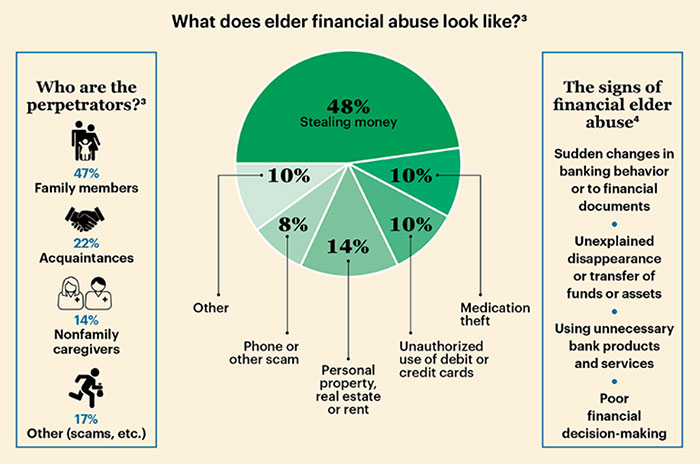
What Does Elder Financial Abuse Look Like?
With that in mind, the first step is identifying incidents when they happen. Sadly, the bad actors who devise schemes intended to target seniors are constantly evolving their approaches. But the Federal Deposit Insurance Corporation (FDIC) identified the following common techniques:
- Lottery and sweepstakes scams
- Grandparent/imposter scams
- Tax and debt collection scams
- Charity scams
- Scams by telemarketers, mail offers or door-to-door salespersons
- Computer and internet scams
- Identity theft
- Reverse mortgage fraud
- Contractor fraud and home improvement scams
- Exploitation by an agent under a power of attorney or person in another type of fiduciary relationship
- Theft of money or property, often by a family member, caregiver or in-home helper
- Investment fraud and scams, including deceptive “free-lunch seminars” selling unnecessary or fraudulent financial services or products
Source: Independent Banker
Ways to Prevent Elder Financial Abuse
Now that we’ve identified some of the techniques used to lure unsuspecting seniors, Plumas Bank and ICBA offer the following suggestions to help curb elder financial abuse:
- Secure private information (such as Social Security card, passport, bank account numbers, financial statements, medical records, and other legal documents), in a bank safety deposit box.
- Check your bank accounts and bill statements carefully. If you notice unauthorized charges or unusual activity, alert your bank immediately.
- Do not disclose personal information, such as bank account numbers or PINs, to anyone claiming to be from an established organization, especially if they ask you to wire funds.
- Ask your trusted bankers at Plumas Bank about available resources to help protect you or your loved ones from scams and exploitation.
- Plan ahead by giving a trusted person the legal authority to make financial decisions for you if you are unable. Make sure your bank has a record of who can manage your money on your behalf
- Contact your local adult protective services agency and law enforcement if you have information about a fraud or suspect you may have encountered financial abuse.
You Think You’ve Been Scammed — Now What?
The fact is, even the scary numbers offered at the beginning of this post don’t tell the whole story of financial elder abuse. That’s because these crimes often go unreported. Why? Experts point to many reasons, including:
- the victim may not know the scam has taken place
- the perpetrator may be a trusted family member, leading the victim to be reluctant to report it
- some victims feel ashamed or embarrassed — unnecessarily, given the devious nature of the fraud
- or a combination of these and other factors
One New York state study, in fact, found that for every reported case, 44 go unreported.
The solution: Identifying resources available to you if you have questions or want to report something suspicious.
“If you bank with us, we can be your first line of defense and a key resource in this fight,” Plumas Bank’s Hamilton said. “Please call on us if you think something seems suspicious or to ask how we can stop these scams before they begin.”
Of course, you’ll want to call 911 if you think you or a loved one is in immediate danger. But if you’re safe and want to report a suspected scam committed against a senior, you can always begin by reaching out to your bank.
The federal Consumer Financial Protection Bureau (CFPB) also recommends that you contact Adult Protective Services for your area.
Here are the two offices dedicated to the states served by Plumas Bank; if you live in another state, use this state-by-state directory:
- California Adult Protective Services
- To report abuse, call this number 1-833-401-0832 and when prompted enter your 5-digit zip code to be connected to the appropriate office in your county.
- Nevada Adult Protective Services
- To report abuse of seniors or adults with disabilities, call 888-729-0571.
Finally, read and bookmark the following national resources:
- ICBA’s eldercare resource page
- FDIC’s money smart for older adults
- “Protecting older adults from fraud and financial exploitation” from the CFPB
“We’re all responsible for spreading the word about financial elder abuse,” Hamilton said. “It begins with awareness and destigmatizing the trauma. Everyone is susceptible, and we’re here to talk about this — completely free of judgment.”
Contact a Plumas Bank Personal Banker
You are leaving Plumas Bank.
The website you are about to visit is not operated by Plumas Bank. Plumas Bank is not responsible for the availability or content of this website. The privacy and security policies of the site may differ from those practiced by Plumas Bank.
Selecting "Continue" will open a new browser window.